

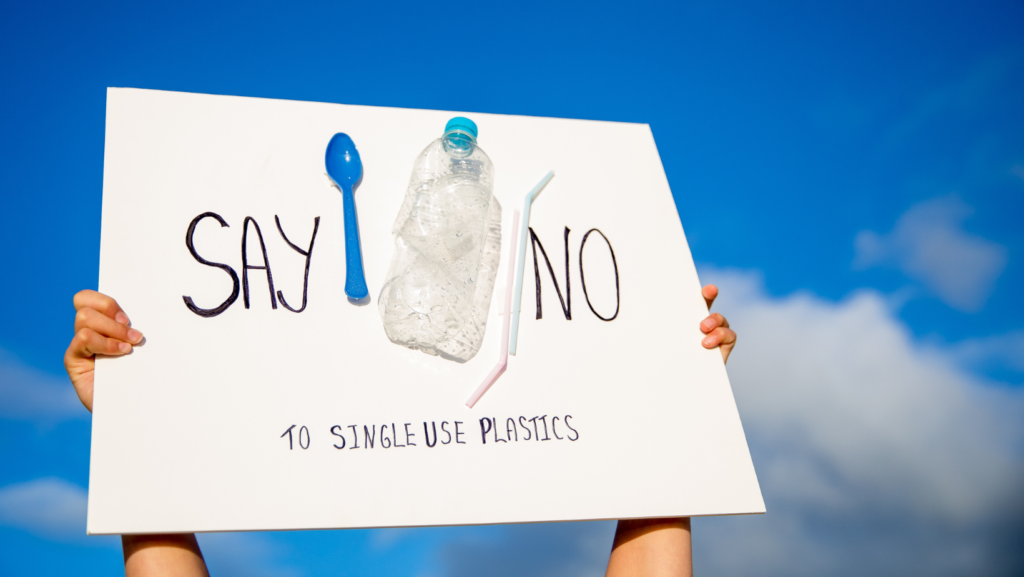
England recently joined the growing list of countries taking action to ban single-use plastic items. Beginning in October 2023, the government initiative aims to reduce single-use plastic consumption in England significantly. What makes a single-use plastic ban effective? Does England’s ban have the practical elements needed?
The power of single-use plastic bans
Single-use plastic bans are gaining traction as the world unites against plastic pollution. Yet, their effectiveness can vary widely. For instance, California’s plastic bag ban 2014 led to an 85% drop in single-use plastic bag use and a 60% reduction in plastic bags polluting rivers. On the other hand, Kenya’s similar ban in 2017 inadvertently created a black market for plastic bags, causing environmental issues.
Critical elements of effective bans
1. What’s Banned Matters
Many single-use plastic bans target items like straws, thin plastic bags, or cutlery, representing only a tiny fraction of single-use plastics. For example, India introduced a ban in July 2022, affecting local market stalls and street food vendors. Their low-profit margins and limited resources made compliance challenging. Critics argue that bans should focus on the more significant contributors to plastic waste, like packaging from supermarkets and multinational companies.
Assessment of England’s ban: The ban demonstrates some targeting by prohibiting items like plastic cutlery and balloon sticks, which are generally non-essential single-use plastics. However, it does not address the issue of single-use plastic packaging. This packaging is a leading source of plastic pollution in the UK and remains unaffected by the ban.
2. Transition to Reuse
Instead of immediately replacing plastic with other single-use items like paper or “compostable” materials, bans should support a shift toward a zero-waste economy. This means encouraging companies to innovate and create reusable systems, accompanied by subsidies for investments in reusables and deposit return schemes. Businesses and individuals can transition with less resistance by allowing time for preparation.
Assessment of England’s ban: The ban lacks clear provisions for sustainable alternatives to the banned items, leaving businesses to determine the compliance process and economically viable options on their own. This may inadvertently result in the displacement of the problem rather than its resolution.
3. Clear Communication
Successful bans require clear communication to producers, retailers, and consumers. Without understanding the reasons behind a ban, compliance can be challenging. Governments must present bans as opportunities for positive change rather than restrictions on freedom or consumer choice. A well-communicated campaign can make people feel part of a movement toward a cleaner world.
Assessment of England’s ban: The UK government’s official guidance explains the implications of the ban, but it also contains numerous exceptions, which could be confusing for businesses and customers. The ban’s success could be enhanced with better public awareness and understanding of the reasons behind the ban and the alternatives available.
4. Enforceability Through Social Pressure
Enforcement of bans often relies on fines, which can be costly and challenging to implement. An alternative approach is social pressure. When the public accepts and understands the ban’s purpose, they are more likely to report violations, reducing the need for extensive monitoring and enforcement. Effective communication plays a significant role in this aspect.
Assessment of England’s ban: We’ll have to wait and see!
England’s ban is undoubtedly a step forward, but it should be considered the beginning of a broader effort to transition toward a greener and more sustainable future. Let’s see what happens in October!